-
 SHOPPING CART item - 0
| ISBN | 9788180695117 |
| Binding | Hard Bound |
| Pages | 380 |
| Year of Publication | 2008 |
| Language | English |
| Size | 25 cms |
| Subject | Globalization , Panchayati Raj , Political Science , Sociology |
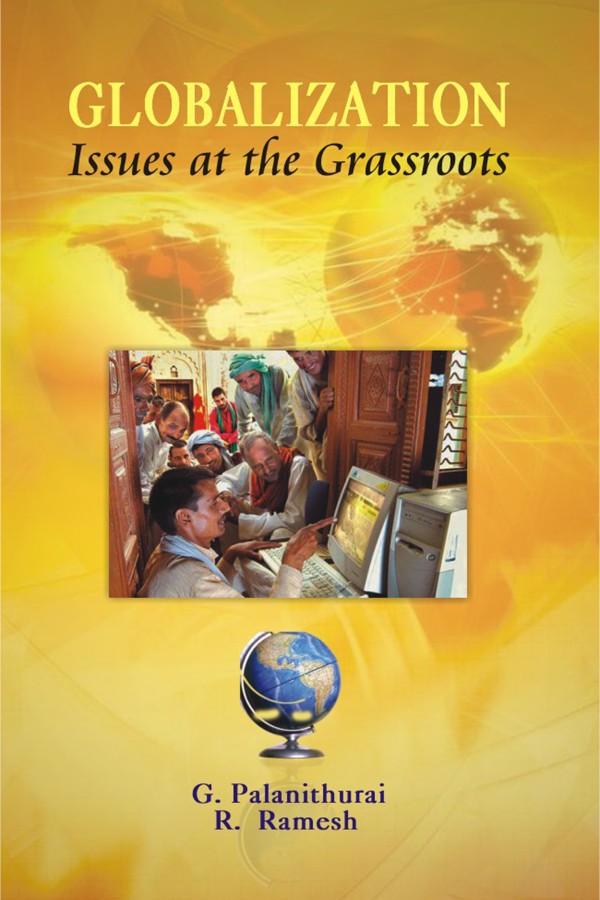
The subject globalization is divisive, and the issues it brings about are discordant especially to those who are working for the cause of defeating disparity in the society. There are contentions put forth that globalization is for the moneyed and the knowledgeable and that it does not serve the purpose of ensuring economic equality or achieving social justice. Many of these statements made come from abstract thinking, gut feeling and at the most from the analysis of macro level scenarios that is emerging either within India or from countries that have attempted implementing the neo-liberal economic policies. However, there is hardly any evidence of empirical research undertaken to shift the rhetoric from grounded reality to speak authentically what is globalization delivering to the poor. This book fills that gap. All the chapters in this book are based on empirical research on each of the controversial issue that globalization has brought about in Tamil Nadu. The basic premises or the trigger to initiate these studies have been voices, with a tinge of globalization policies, from various villages of Tamil Nadu during post-liberalization era. The focus of analysis and discussions has been if liberalization policies and the globalization process benefit the rural poor in general and rural pursuits in particular. Each chapter covers one area of rural sector with a view to figure out the changes and the results of the changes that are taking place in a given sector under the changing politico-economic milieu of the country. It also gives a set of suggestions to initiate grassroots level action that can help enhance the benefits and reduce the dangers of globalization. Those interested in understanding the grassroots level realities as a corollary of globalization would find this book interesting and immensely useful.
G. Palanithurai, Former Professor, Rajiv Gandhi Chair for Panchayati Raj studies, Department of Political Science and Development Administration, Gandhigram Rural Institute – Deemed University, Gandhigram is an academic activist. All his academic, research and outreach activities are being supported by an array of funding agencies, namely the world Bank, UNDP, UNICEF, Hunger Project, SDC, DANIDA, Action Aid International, Ford Foundation, Population Foundation of India, Rajiv Gandhi Foundation, Toolkit Foundation Netherland, Ministry of Panchayati Raj and State Planning Commission. He was a visiting professor in Cologne University, Germany. He has to his credit seventy three books, 126 research articles, 112 popular articles in popular newspapers, 83 monographs published in a span of three decades. He was and is member of many advisory committees of the Government of India and Government of Tamil Nadu pertinent to local governance and rural development.
R. Ramesh is working as Associate Professor at the National Institute of Rural Development & Panchayati Raj (NIRDPR), Hyderabad. He also works closely with the Ministry of Panchayati Raj and Ministry of Jal Sakthi in their training and capacity building efforts. He is associated with the Unnat Bharat Abhiyan (UBA) programme of the Ministry of Education. In UBA, Dr R Ramesh serves as a member of the Subject Expert Group, and also as a member of the National Coordination Committee of UBA Programme. His involvement in rural development spans over 30 years. He has published several books, papers and training manuals on rural development related themes. Before moving to work for NIRDPR Hyderabad, he worked for Sri Aurobindo Society, Puducherry for a brief period.