-
 SHOPPING CART item - 0
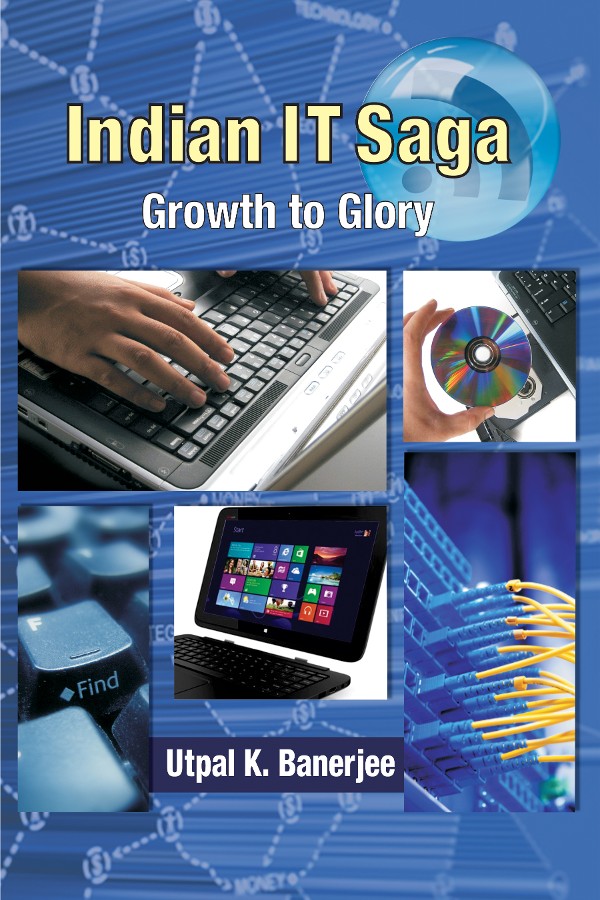
| ISBN | 9789351250616 |
| Binding | Hard Bound |
| Pages | 243 |
| Year of Publication | 2014 |
| Language | English |
| Size | 23 cns |
| Subject | Library Sciences , Science and Technology |
This book is a “first-person, singular-number” account of Indian Information Technology (IT) scene—studded with personal reminiscences of Indira Gandhi, the Dalai Lama, Rajiv Gandhi and the iconic leader Sam Pitroda from India and John Diebold, the father of automation from the USA. Interspersed by many facets, episodes and occasional, incisive analyses, the colourful scenario began, for the author, from management in 1966, reached computers as “Commonwealth Scholar” in 1968-72 and—after over four decades—still continues with metadata management in national audio-video (A-V) cultural archives, as “Tagore Research Scholar”, from 2012 onwards. It remains primarily a User viewpoint that observes not just hardware (HW) and software (SW), but mainly applications, emerge into the Indian arena and bring forth cataclysmic changes in the total scenario,—belying all the dire predictions of loss of employment and ultimate doom, and eventually ushering in utility and felicity at an unimaginable level: exceeding even the rosiest of all expectations. It has been, in a nutshell, transition from the “worst of times” to the “best of times”, in a true Dickensian sense !
Utpal K. Banerjee took his honours degree in Pure Physics (1955) from the University of Calcutta and his Ph.D. from the University of Manchester, UK (1972) where he was awarded the Commonwealth Scholarship. After serving for 17 years in the Ministries of Defence, Industry and Finance, Dr. Banerjee worked with Tata Steel as Chief of Management Services; the Administrative Staff College of India as Director of Computer Division; Electronics India as its Senior Executive Director; and finally, All India Management Association as its Director General. He has also considerable experience of teaching at the IITs, IIMs Jawaharlal Nehru University, International Management Institute, FORE School of Management, and Management Development Institute. Apart from many research papers, Dr. Banerjee has 15 books to his credit.