

-
 SHOPPING CART item - 0
| ISBN | 9789351251453 |
| Binding | Hard Bound |
| Pages | XII, 87 |
| Year of Publication | 2015 |
| Language | English |
| Size | 23 cms |
| Subject | Political Science |
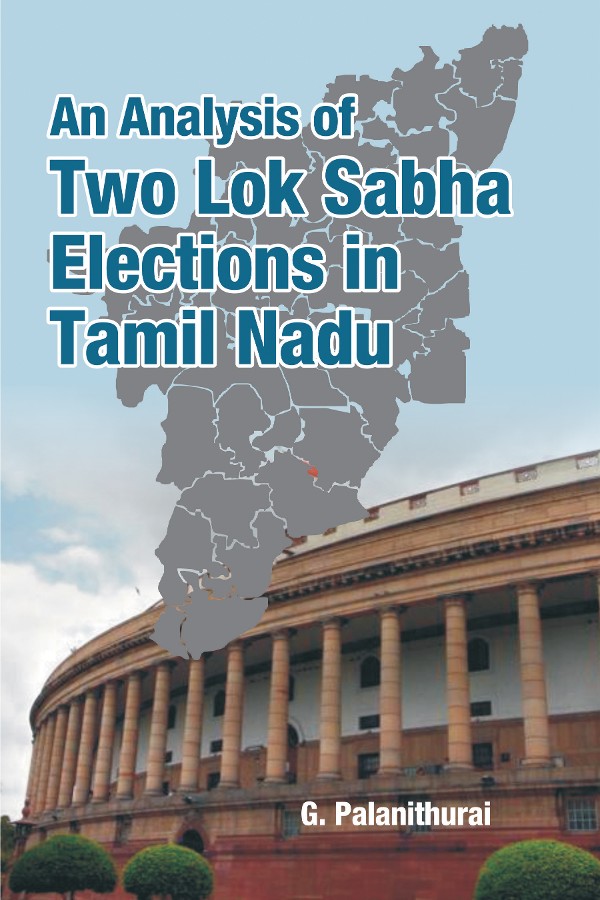
This small monograph deals with the processes of two Lok Sabha elections in Tamil Nadu. It analyses the political conditions in Tamil Nadu during the time of Lok Sabha elections. How political parties handled the conditions to seek maximum benefits in terms of votes and seats have been analysed. Tamil Nadu is known for social welfare schemes and populism and they are being used as tools and instrument to attract the voters. Both the parties namely the DMK and the AIADMK are the offshoot of the Dravidian Movement and they have marginalized the national political parities in Tamil Nadu. Yet they form alliance with national political parties in facing the election as alliance alone brought victory in the past. How these two major political parties the DMK and the AIADMK form electoral alliance and how they manage the election campaign have been analysed succinctly. Further, it analyses the electoral outcome from the perspectives of the factors that contributed substantially for getting votes to increase the seats. Basically it analyses the factors responsible for bringing victory in the electoral competition in the successive two elections of Lok Sabha in Tamil Nadu. Significantly it brought to light the political culture of Tamil Nadu. How in Tamil Nadu a culture of conflict and vendetta has been developed between two political parties has been analysed. Totally Tamil polity has been reduced to the leadership conflict which afflicted the whole party system in Tamil Nadu. It is interesting to note that corruption does not play as a factor in determining electoral victory and in such a way a new political culture has been developed. Ultimately instead of democratization, authoritarianism has been perpetuated in the functioning of the two political parties. They are being analysed in the electoral context in this book.
G. Palanithurai, Former Professor, Rajiv Gandhi Chair for Panchayati Raj studies, Department of Political Science and Development Administration, Gandhigram Rural Institute – Deemed University, Gandhigram is an academic activist. All his academic, research and outreach activities are being supported by an array of funding agencies, namely the world Bank, UNDP, UNICEF, Hunger Project, SDC, DANIDA, Action Aid International, Ford Foundation, Population Foundation of India, Rajiv Gandhi Foundation, Toolkit Foundation Netherland, Ministry of Panchayati Raj and State Planning Commission. He was a visiting professor in Cologne University, Germany. He has to his credit seventy three books, 126 research articles, 112 popular articles in popular newspapers, 83 monographs published in a span of three decades. He was and is member of many advisory committees of the Government of India and Government of Tamil Nadu pertinent to local governance and rural development.


