-
 SHOPPING CART item - 0
| ISBN | 9789363440012 |
| Binding | Hardbound |
| Pages | XX, 272 |
| Year of Publication | 2027 |
| Language | English |
| Size | 23 cms |
| Subject | North East Indian Studies , Panchayati Raj , Political Science , Rural Development , Sustainable Development |
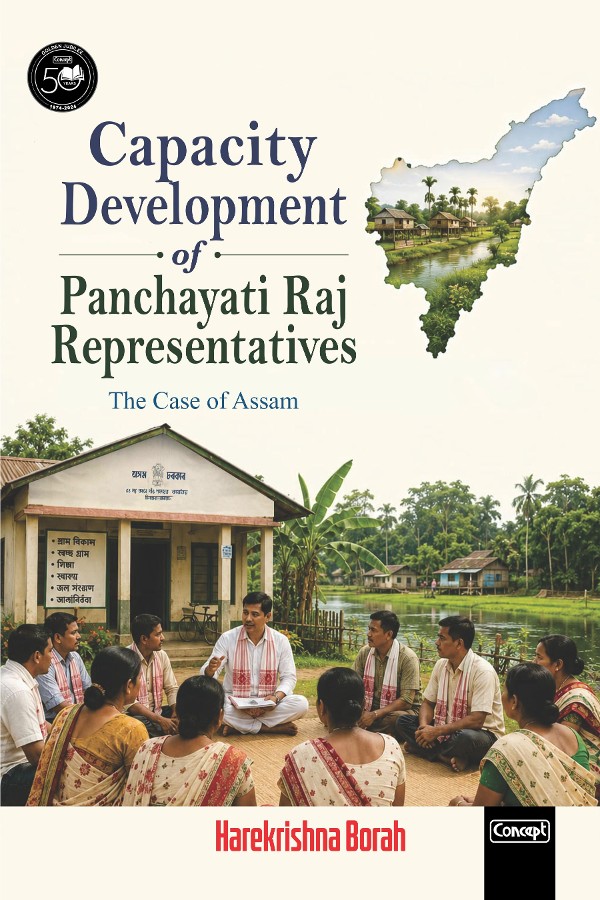
There has been utter need for decentralization of power in one hand and relatively weak and inefficient leadership at all the three tiers of Panchayati Raj system to shoulder the responsibility on the other hand. In the neo-liberal market driven society, panchayats are expected to deliver good governance at the grassroots. Here the need for trainings comes in and the author feels imperative for elected panchayat representatives to undergo training in diverse aspects particularly relating to dynamics of Panchayati Raj Institutions and national priorities.
Against this backdrop, the book provides a platform to understand the need and importance of training in the functioning of Panchayati Raj system in Assam. The experiences shared in this volume imply that for holistic development of the villages, their representatives need sustained and systematic capacity building interventions.
In the present study, an attempt has been made to contextualize the training initiatives of the State Institute of Panchayat and Rural Development (SIPRD), Assam in the light of the National Capacity Building Framework. The impact of training upon the Gram Panchayat presidents are analysed with special reference to issues like—empowerment of women, devolution of powers and functions, autonomy of Gram Panchayat, participatory planning process, SDGs, resource mobilization by the Gram Panchayats, etc. The experiences shared in this volume can be useful for training providers, master trainers, scholars in the field of Panchayati Raj, students and rural leaders.
Harekrishna Borah currently teaches Political Science at Mahapurusha Srimanta Sankaradeva Viswavidyalaya, Nagaon, Assam. He was awarded a doctoral degree by Assam University, Silchar, in May 2022. He worked as a master trainer of National Institute of Rural Development and Panchayati Raj (NIRDPR) for several years. He was also a certified "A" grade master resource person of the SIPRD, Assam. His earlier publications include textbooks as well as research articles on various issues of politics. His areas of interest include society and governance, Panchayati Raj Instituions and rural development, neo-Vaishnavite movement and Sattriya culture of Assam.