

-
 SHOPPING CART item - 0
| ISBN | 9788170225508 |
| Binding | Hard Bound |
| Pages | 158 |
| Year of Publication | 2025 |
| Language | English |
| Size | 23 cms |
| Subject | Anthropology , Sociology |
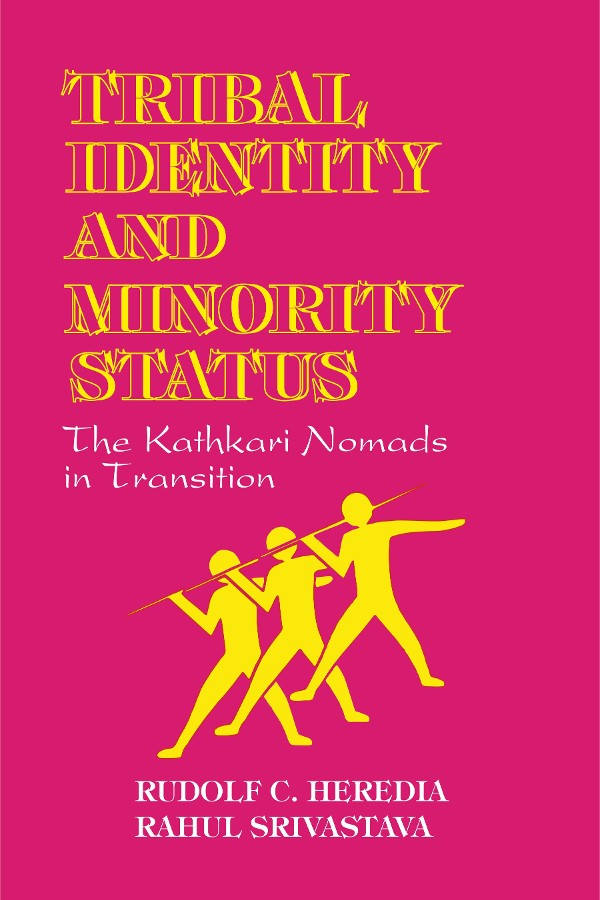
The tribal question in our changing world must be clarified in its historical context, and contextualized in relation to the environment. For it raises fundamental issues for our society: of social equity, ecological sustainability, and peoples participation; of cultural autonomy and democratic integration. And in India national development cannot be separated from tribal integration, or for that matter the marginalized minorities in our society.
This study focuses on the Kathkaris a small group of tribals in Raigad district, Maharashtra, near New Bombay. They have been officially classified at different times as primitive and economically backward. The floodtide of change just a small step away from their settlements represents for them a giant leap into an unfamiliar and unaccommodating world that threatens not just their Kathkari identity, but even their survival as a social group.
It is precisely because these Kathkari tribals are so vulnerable and so much at risk that a study of their changing situation in its historical context can provide a pertinent perspective from the ‘underside’, on these very changes. In focusing on the Kathkaris, this study attempts to draw out the wider implications for similarly placed groups from the significant findings here.
For if the ‘fundamental issues’ on the tribal question are to be faced, then, we must go beyond ‘vague’ and ‘weak’ descriptive studies to a more profound analysis. Here we argue that to preserve the identity and dignity of these threatened people today, tribal ethnicity needs to be moblized to overcome their minority status, so that in their integration into the national mainstream, the distinctive contribution they make will be appreciatively accepted, and the incisive challenge they pose honestly faced by he larger society.
RUDOLF C. HEREDIA completed his doctorate in sociology from the University of Chicago in 1979. From 1980, he has been the Director of the Social Science Centre at St. Xavier's College, Bombay, and has recently been appointed director of the research department at the Indian Social Institute, New Delhi.
His publications include: "Structure and Performance of College Education: An Organizational Analysis of Arts and Science Colleges in Bombay" (Somaiya, Bombay, 1981); "Religious and Social Change: Behavioural Responses in Bombay University" (Indian Social Institute, 1984), "Voluntary Action and Development: Towards a Praxis for Non-Government Agencies" (Concept, 1988); "Urban Housing and Voluntary Agencies: Case Studies in Bombay" (Institute of Social Sciences, New Delhi, 1989). At present he is working on a study of Jesuit seminary training in South Asia.
Rahul Srivastava graduated from St. Xavier’s, College, Bombay University in Sociology in 1989. He completed his M.A. at Jawaharlal Nehru University, New Delhi, in 1991. After a year of teaching at St. Xavier College, he joined Social Science Centre to work on his research project. He is now an Inlaks scholar completing his M.Phil in social anthropology at Cambridge, England.


