

-
 SHOPPING CART item - 0
| ISBN | 9788170225775 |
| Binding | Hard Bound |
| Pages | 439 |
| Year of Publication | 1996 |
| Language | English |
| Size | 23 cms |
| Subject | Geography , History , Political Science , North East Indian Studies , Sociology |
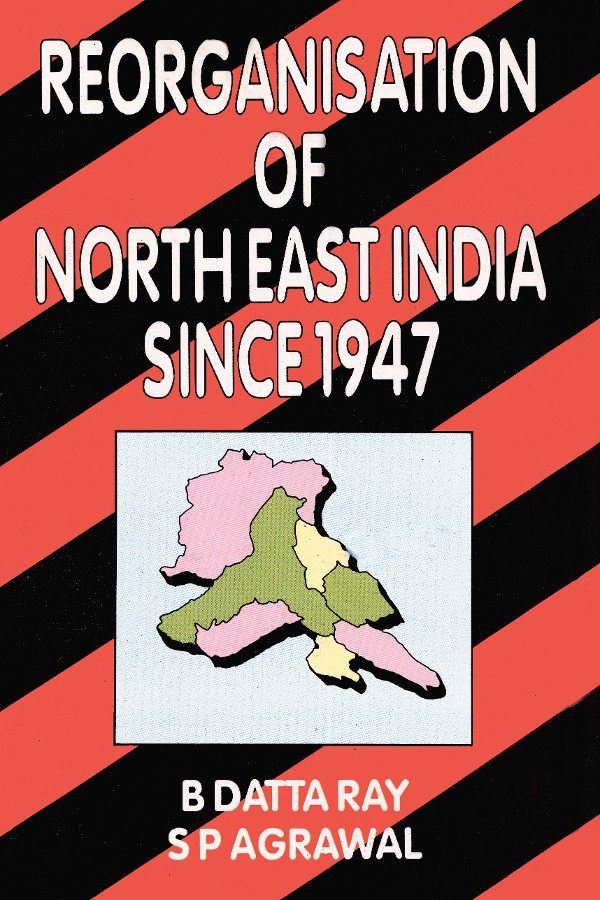
No region in India has undergone such fragmentation as North East has in the four decades after independence. What remains of the old province of Assam after the last reorganization in 1972 are virtually the districts of the Brahmaputra and barak valleys where British rule in the north east began after the first Anglo Burmese War (1824-26). The hill regions that were brought under the administrative control of Assam as the eastern frontier of the empire extended, now formed as separate states. While the process of expansion and integration was spread over a century, the disintegration and territorial reorganisation has occurred with in relatively short time. The volume is planned to go into the historical background of the problem with special reference to the fragile nature of the administrative unity given to the erstwhile province of Assam by the British; the partition at Independence and the Question of ethnic identity including the role of language and the demand for reorganisation. It further examines the consequences of partition and reorganization particularly on the social end economic developmental process in the region and the political fall out.
B. Datta Ray is a veteran freedom fighter, a tamrapatra holder and a social scientist. He is the founder Secretary of North East India Council for Social Science Research since 1974.
S.P. Agrawal (b. 1929) was Director, National Social Science Documentation Centre, ICSSR, and Member Secretary, Indian Association of Social Science Institutions. He was also the Vice-Chairman of the Asia and Pacific Information Network in Social Sciences (APINESS). In 1988 he was awarded the degree of Doctor of Philosophy in Education (Honoris Causa) by International University Foundation. Presently, he is Member, Round Table on Research in Reading, IFLA, and Member, International Committee for Social Science Information and Documentation. He is also Member of Board of Studies of National Archives of India and Hindi Advisory Committee, Ministry of Coal, Government of India. Born and brought up in the cradle of freedom movement which he joined at the tender age of twelve, he gained an insight into political problems and 'developed a sense of responsibility which bore fruit as an information scientist committed to Gandhiji's philosophy and action-plan in the field and its social concept. He. has written extensively on various aspects of education, Indian Polity and library and information science.


