

-
 SHOPPING CART item - 0
| ISBN | 9788170226505 |
| Binding | Hard Bound |
| Pages | 189 |
| Year of Publication | 1997 |
| Language | English |
| Size | 23 cms |
| Subject | Political Science , Public Administration |
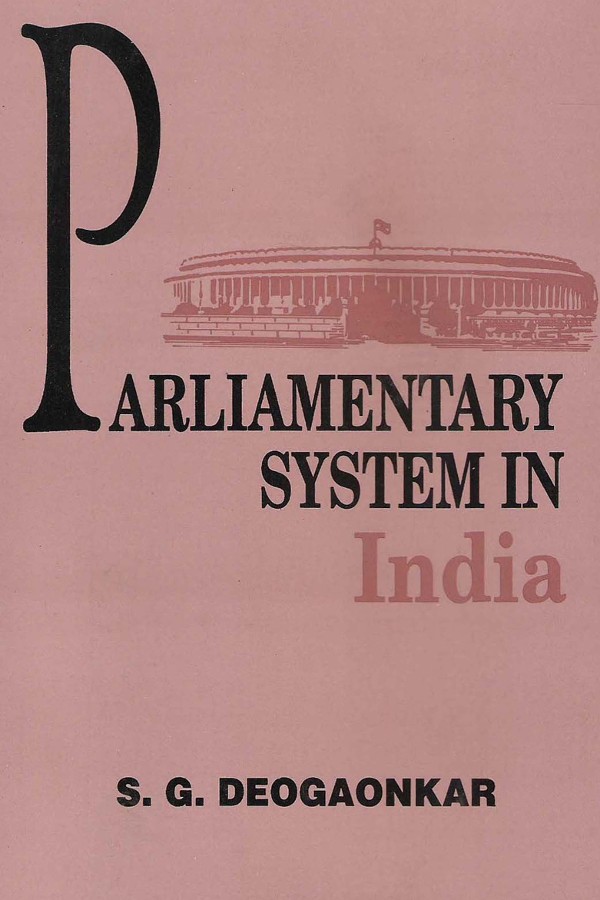
Since India started experimenting with the parliamentary system, many changes have taken place in the functioning of the structures adopted, the conventions, and the norms of functioning of the system. As a result, our Parliament (Sansad) has emerged as a 'Mode' by itself. This book focuses our attention primarily on this vibrant and live aspect of our parliamentary system. This is one of the few studies which concentrates on the actual functioning of the two Houses of parliament and covers the constitutional as well as the political aspects. It also describes the Executive ant the Judicial Institutions and analyses their interrelations with the Legislature. Topics like parliamentary privileges, anti-defection enactment and the controversies which arose during its implementation, the innovation in the committee system of the Parliament, and the judicial decisions and case law pertaining to some relevant issues are specially discussed. The use of authentic sources and an objective analysis of current problems challenging the viability and credibility of our system has made this book a valuable addition to the literature on the subject. The book addresses itself not only to the students of our political system but also to the people representatives who are entrusted with the responsibility of keeping our democratic institutions clean, efficient and still responsive to a dynamic society. It may also attract the attention of enlightened readers who want to know who democracy actually functions in our society.
S.G. Deogaonkar has been a teacher and scholar in Political Science for the last thirty-five years. He holds Masters degrees in Political Science and Public Administration and is LL.M in Constitutional Law and Administrative Law. In addition he holds a Ph. D. degree in Social Science. His field of specialisation is Constitutional law, Political Anthropology and Tribal Development. Dr. Deoganokar has completed many post-doctoral research projects for the U.G.C. and ICSSR and was a National (Post-doctoral) Research Fellow in Tribal Development of the Ministry of Welfare, Government of India. He has participated in numerous conferences seminars including the Xth international Congress of Anthropological and Ethnological Sciences. He was a Member Participant of the Socio-Economic Groups on Scheduled Castes and Scheduled Tribes for formulation of the Eighth Five year Plan Schemes constituted under the Backward Classes Division of the Planning Commission. He is a Non-official Member on the Governing Council of the Tribal Research and Training Institute of the Government of Maharashtra, Pune, and a coopted Member of the Humanities and Social Sciences School of the Yashvantrao Chavan, Maharashtra Open University at Nasik (Maharashtra). He is a member of the zonal Advisory Board of the Western Zone of the Life Insurance Corporation of India. Dr. Deogaonkar has published many works like. Administration for Rural Development in India: Political Anthropology; tribal Exploitation; Tribal Administration and Development; The Banjaras; The Hill Korwas; Tribal Development Plans, etc. At present, Dr. Deogaonkar is working as Head, Department of Political Science, at the Anand Niketan College Warora Maharashtra). Simultaneously, he is also working as Honorary Chief Research Scientist, at the Centre for Social Science Research on Leprosy, at the Gandhi Memorial leprosy Foundation at Wardha.


