

-
 SHOPPING CART item - 0
| ISBN | 9788170226550 |
| Binding | Hard Bound |
| Pages | 427 |
| Year of Publication | 1996 |
| Language | English |
| Size | 23 cms |
| Subject | Economics , Political Science , Sociology |
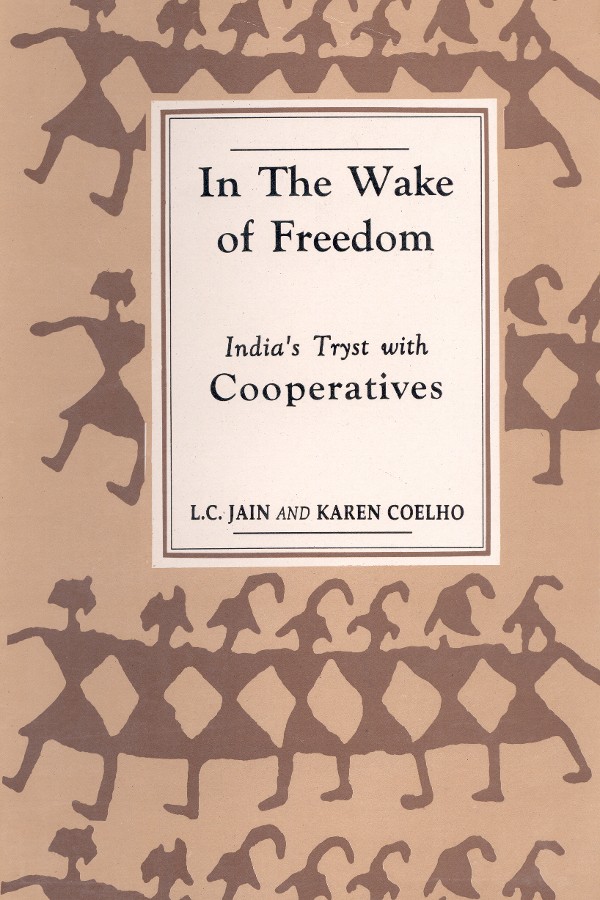
The impulses of the freedom movement gave birth to many initiatives and institutions in the post-Independence era, all too eager to consolidate freedom and build a new India. The Indian Cooperative Union (ICU) was one such institution born in 1948, led by Kamaladevi Chattopadhyaya. The ICU pioneered many self-help endeavours among the landless agricultural workers and small farmers, raising of the Faridabad township by 50,000 refugee settlers from the North-West Frontier Province, development of Central Cottage Industries Emporium for providing inter-state and export markets for artisans in handicrafts and handlooms, development of Super Bazaar cooperative store in consumers interest. As at the grassroots level, the ICU also in the forefront of advocacy of cooperative principles and policy to influence India approach towards people-led development sustained by democratic decentralization. The book here includes the ICU well-researched treatise on Cooperative Principles and their relevance to India's socio economic goals, Cooperative Farming, Rural Credit, Cooperative Law, Community Development and Development of Handicrafts. Forty years ago, the ICU also foresaw the need for voluntary organizations in India uniting together and helped to setup the Association of Voluntary Agencies for Rural Development (AVARD). This book recalls ICU contribution especially in the immediate post-independence period and highlights the enhanced relevance of cooperatives today.
L.C. Jain Born 13 December 1925. Joined the Quit India movement during the freedom struggle, was invited by the Central Relief Committee of All-India Congress Committee to look after the post-partition refugee camps; later joined Kamaladevi Chattopadhyaya in founding the Indian Cooperative Union (ICU) to build rural cooperatives and revive the traditional handicrafts and handlooms of India . Starting as a Village cooperative organizer in 1948, was later elected General Secretary of ICU. Apart from rural cooperatives he was actively involved with major Indeavours of ICU: building of the Faridabad industrial township by refugees on self-help basis, development of the Central Cottage Industries Emporium and the setting up of the first Super Bazaar, as a cooperative store, and research studies. He was also non-official Chairman of the All India Handicrafts Board. Over the past five decades he has been active in advocacy of democratic decentralisation and just and equitable economic policies whether as a member of the State Planning Boards of Uttar Pradesh, Karnataka, Assam and Tamil Nadu; and the National Planning Commission, or as a writer in newspapers and journals. He received the Magsaysay award for Public Service in 1989. Currently, he is Chairman of Industrial Development Services techno-economic consultancy organisation, and of the institute of Social Change and Development, an ICSSR-sponsored institute for the north-east region. He is coauthor of Grass Without Roots, Rural Development under Government Auspices.
Karen Coelho Born 3 June 1963. Currently holds a faculty position at the Bureau of Applied Research in Anthropology (BARA) at the University of Arizona, has an M. Phil. In Development Studies from the University of Sussex, U.K. She earlier worked for several years with Asian Community health Action Network (ACHAN) in Madras, and has extensive experience in networking and training in various Asian countries and in different parts of India. In 1994 she worked as a Consultant on women and Panchayati Raj with Mahila Samakhya, Karnataka (MSK), where she helped to document the experiences of women sanghas, and to devise training curricula for them. He current work at BARA includes food security analyses of various African, Latin American and Caribbean countries fro CARE, and a project on integrating gender concerns into agricultural policy for the FAO.


