

-
 SHOPPING CART item - 0
| ISBN | 9788170220732 |
| Binding | Hard Bound |
| Pages | 83 |
| Year of Publication | 2019 |
| Language | English |
| Size | 23 cms |
| Subject | Anthropology , Journalism and Mass Communication , Sociology |
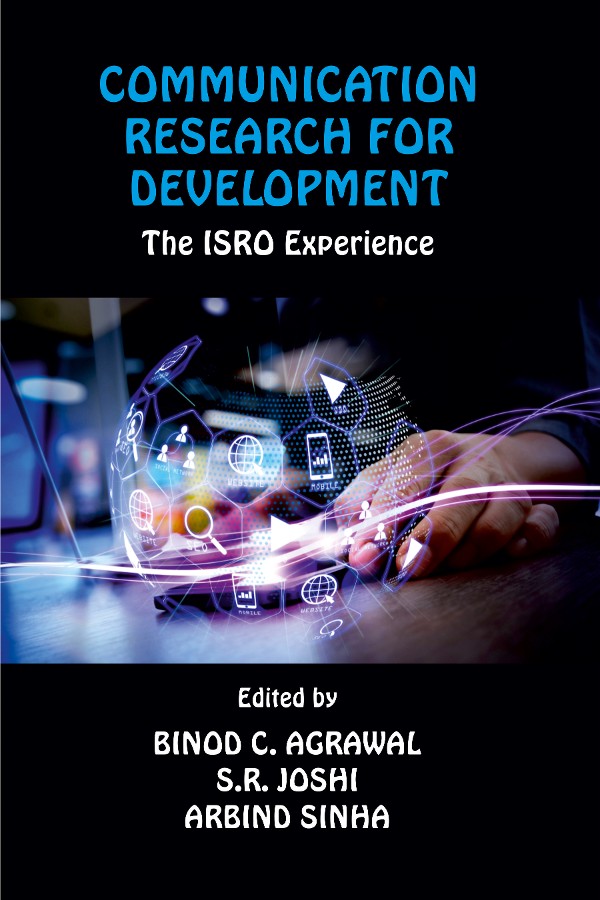
A small group of social scientists and communication researchers were involved for conducting the social impact study of India's State llite Instructional Television Experiment (SITE August 1975- July 1976) and since then some of them continue to work in this area. Some more joined to work in this area. Some more joined to work with Kheda Communication Project after the SITE was over. Since then this group has contributed a lot in understanding the theoretical, methodological as well as process aspects of communication and communication research. The book based on mostly the first hand experience of the authors documents the historical background of the communication research in India, examines the validity of anthropological methods of communication research vis-a-vis conventional methods. It also reviews the contribution Indian television has made for women and youth employment and it gives interesting accounts of the field experience in field data collection particularly from rural areas. The book would be a historical document of the contribution of a scientific and technological organization in the field of communication and rural development. It will be useful to those who want to understand the educational and development role of communication as well as to those who want to have a feel of field realities.
Binod C. Agrawal (Ph.D. Anthropology, 1970, University of Wisconsin, Madison, USA) is a well-known International Communication Research expert. He has a reputation of being innovative in research methods and techniques, institution building, management and teaching leadership. Founder Director of several institutions and a university. Earlier he worked for over two decades and pioneered use of qualitative methods for communication research during the world famous Satellite Instructional Television Experiment (SITE), 1975-76 and led an interdisciplinary SITE social research team of over 100 social scientists. Author of two dozen books and several dozen articles in national and International Journals and continues to publish. He is currently the Mentor of Media Research Centre at School of Communication, Manipal Academy of Higher Education, Manipal.
S.R. Joshi has Masters degree in psychology and he is working in the field of television research for more than eight years. He has specialized in the area of formative research and participated in international courses in India and abroad. He also worked on a UNESCO project. Mr. Joshis special interest area is television and women. He is attached to Kheda Communication project of DECU, ISRO.
Arbind Sinha, M.Sc. (Anthropology), Ph.D. (Sociology), the formar Associate Director and Acting Director is Adjunct Professor and Advisor with MICA. He worked for 22 years with Space Applications Centre – ISRO holding various scientific positions (1974-1996). He was Professor at TALEEM Resarchrch Foundation and Director-General of Shanti Business School, Ahmedabad. Dr. Sinha worked for two years as Communication Advisor to the Royal Danish Embassy in New Delhi.
He worked in the field of Social and Development Communication, Health Communication, and Disaster Communication for nearly 30 years and published two authored and two edited books and more than two dozens of papers and Dr. Sinha lectured in Sweden, Canada, and US Universities on fellowship and was in Thailand and Singapore for academic collaborations.


